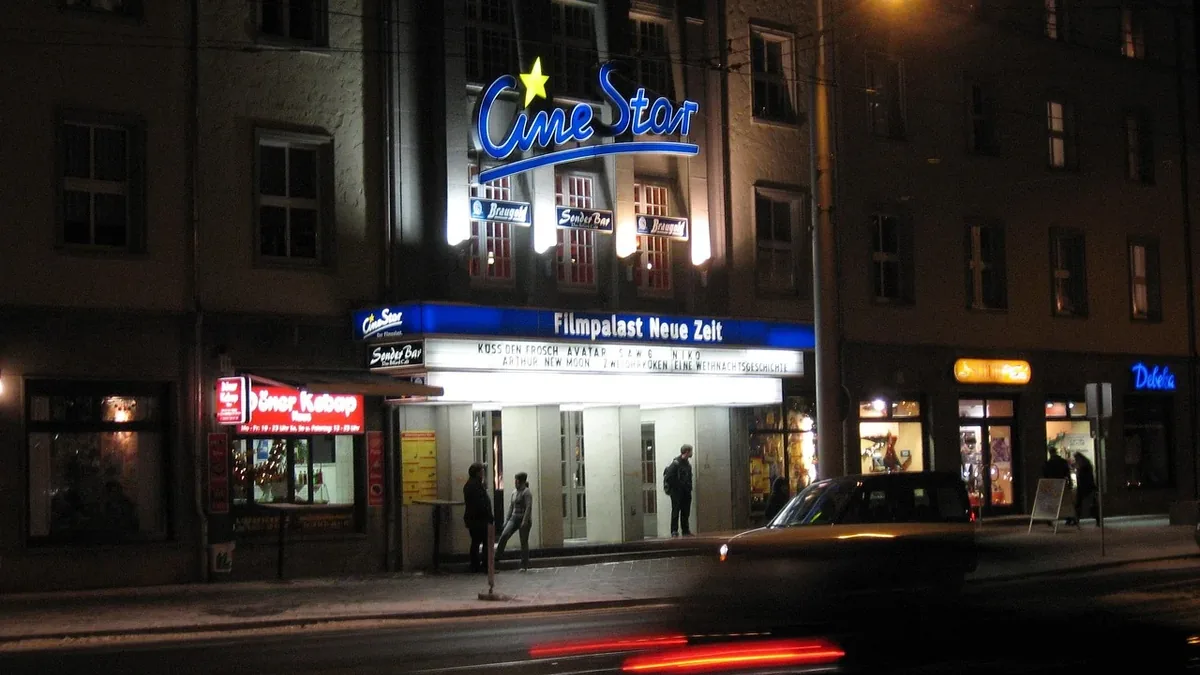
Cinema Closures And Estate Changes
| Release date | 2024 |
|---|---|
| Country of origin | United Kingdom |
| Original use | Documentary film |
| Available on | BBC iPlayer |
| Box office | Not applicable (TV documentary) |
Origin and history
Cinema Closures And Estate Changes is a documentary film originating in the United Kingdom. It was created and released in the early 2020s, a period defined by significant upheaval in the global exhibition industry. The film's production was directly motivated by the unprecedented wave of cinema shutdowns triggered by the COVID-19 pandemic. It documents a specific, critical moment in the cultural history of urban development and entertainment venues. The filmmakers compiled their work over several years to track the immediate aftermath and longer-term consequences of these closures. Its historical context is firmly rooted in the economic and social shifts affecting major cities in the UK during this decade.
What it is for
The documentary serves as a detailed visual record of the transformation of cinematic spaces into alternative real estate ventures. Its primary function is to archive the architectural and social loss of these cultural landmarks before they are permanently altered. It aims to provoke discussion about urban planning priorities, questioning the value placed on communal cultural spaces versus commercial redevelopment. The film is also intended as a resource for historians, urbanists, and film enthusiasts seeking to understand this period of transition. Furthermore, it provides a platform for the voices of former cinema employees, local patrons, and development stakeholders. Ultimately, it acts as a case study on the fragility of dedicated entertainment venues in the face of economic pressure and changing property markets.
Cast of Cinema Closures And Estate Changes
The documentary features a diverse cast of interviewees rather than performers in a traditional narrative sense. Key participants include former managers and projectionists from the affected cinemas, who provide firsthand accounts of the closures. Urban planners and real estate developers appear to explain the financial rationale and vision behind converting the properties. Architectural historians and conservation officers contribute analysis on the cultural significance of the cinema buildings themselves. Local residents and community campaigners form a crucial part of the cast, offering perspectives on the social impact of losing a neighborhood venue. The film is also punctuated by the observations of film studies academics and industry analysts who contextualize the trend within broader cinematic history.
Cinema Closures And Estate Changes ending explained
The documentary concludes without a simplistic resolution, reflecting the ongoing nature of the phenomena it examines. The final scenes often contrast the vibrant past of a cinema, shown through archival footage, with the stark reality of its present state, either boarded up or mid-renovation. It highlights that the closure of a cinema is rarely an endpoint but a transition point, leading to spaces like luxury apartments, office complexes, or retail units. The ending emphasizes that the cultural estate of a community is permanently changed, even if the physical structure remains. It suggests that the memory and function of these spaces are irrevocably altered, posing a question about what fills the void they leave behind. The film closes on a contemplative note, leaving the viewer to consider the long-term implications for public space and shared cultural experience.
Overview
Cinema Closures And Estate Changes is a feature-length observational documentary that investigates the fate of traditional movie theaters in a changing urban landscape. It employs a mix of contemporary interviews, archival cinema advertisements, and present-day footage of the buildings in various states of disuse or redevelopment. The film structures its narrative geographically, examining several case studies across different towns and cities to identify common patterns. It meticulously traces the timeline from a cinema's final public screening through the sale of the building to its subsequent planning applications and construction work. The overview reveals a systematic process where cultural value is often subordinate to land value in development decisions. The documentary maintains a sober, investigative tone, prioritizing factual presentation and witness testimony over sentimentalism.
What to know
The documentary focuses specifically on standalone or small-chain cinemas, not multiplexes operated by large international corporations, which often have different economic realities. It is important to understand that the film deals with the concept of "estate" in both a physical property sense and a cultural inheritance sense. Viewers should be aware that the documented closures are frequently presented as economically inevitable, yet the film subtly questions the absoluteness of this narrative. The redevelopment projects shown are not uniformly portrayed as negative but are critically examined for their contribution to, or erosion of, community fabric. The film does not advocate for a return to a past model but implicitly argues for more conscious urban stewardship. Knowledge of the UK's planning permission system and listed building status is helpful, though the film provides sufficient context for a general audience.
Common questions
A common question is whether the documentary offers any solutions or models for successfully repurposing cinemas while retaining their cultural function. Another frequent inquiry concerns the geographical scope, with viewers asking if it covers cinemas across the entire United Kingdom or focuses on a specific region like England or Scotland. People often want to know if the filmmakers approached the large cinema chains for comment on the trends affecting their smaller competitors. Many viewers question the availability of the archival footage and how the production team secured rights to use historical cinema trailers and advertisements. A practical question is whether the film is suitable for educational use in courses on media studies, urban geography, or modern history. Audiences also commonly ask about the runtime and whether the documentary was originally produced for television broadcast, streaming platforms, or film festival circuits.
Pros and cons
A significant pro of the documentary is its methodical and evidence-based approach, building a compelling argument through accumulated case studies rather than rhetoric. It successfully gives a human face to an economic trend by foregrounding the experiences of displaced workers and disappointed communities. A notable con is that its pace can feel deliberate to the point of being slow, which may lose viewers seeking a more dynamic or emotionally charged narrative. Some critics argue that by presenting all sides, the film occasionally adopts a neutral tone that dilutes its critical potential, failing to fully challenge the developers' claims. The narrow focus on a specific type of cinema closure, while deep, can be a con for those seeking analysis of the entire film exhibition industry's challenges. A viewer who regrets choosing it is likely one expecting a nostalgic, celebratory look at old cinemas rather than a sober dissection of their demise and conversion.
Who it suits
This documentary suits students and academics in fields such as film studies, cultural geography, urban sociology, and modern British history. It is highly appropriate for professionals in urban planning, architectural conservation, and local government who are engaged with issues of heritage and land use. Cinema enthusiasts and historians with an interest in the material infrastructure of film exhibition will find it a valuable resource. The film suits viewers who prefer analytical, journalistic documentaries over character-driven or sensationalist non-fiction storytelling. It is less suited for audiences seeking light entertainment or a family-oriented film, given its serious subject matter and procedural focus. Ultimately, it is for anyone interested in the silent transformations of their urban environment and the complex trade-offs between preservation and progress.
Latest Cinema Closures And Estate Changes news
Latest reporting
Netflix Plans Major Theatrical Release for KPop Demon Hunters Sequel
Netflix CEO Ted Sarandos confirmed a broad global cinema rollout for the sequel to its Oscar-winning animated hit.

Ghosts movie trailer reveals October 2026 release date
A new trailer for the film 'Ghosts: The Possession Of Button House' has been released, confirming a UK cinema release date of 23rd October 2026.

Romcom 'Premature' sets Glasgow as itself
The indie romantic comedy 'Premature', directed by Kevin Walls, is set for a cinema release next Friday. Shot on a tiny budget across Glasgow, it...
Odeon introduces restrictions on MyLIMITLESS unlimited cinema membership
Odeon has implemented new limits on its MyLIMITLESS subscription service, targeting members who book across multiple cinemas or repeat the same film...

Chris Carter Releases Director’s Cut of *The X-Files: I Want to Believe* - A Fresh Take on a Forgotten Sequel
Chris Carter has unveiled a new director’s cut of *The X-Files: I Want to Believe*, titled *Vrach Frankenshteyn*, aiming to refine the 2008 film into...