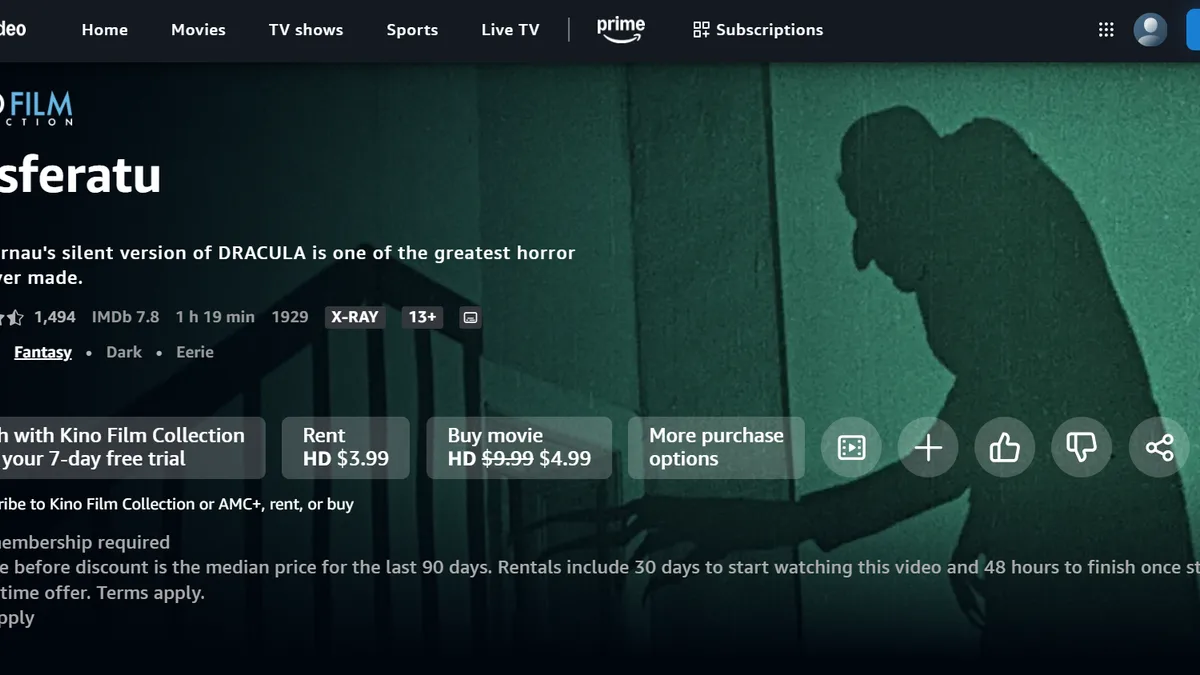
Prime Video
| Original name | Amazon Prime Video |
|---|---|
| First launched | 2006 |
| Country of origin | United States |
| Original use | Streaming video on demand for Amazon Prime members |
| Available on | Amazon website, Prime Video app, smart TVs, streaming devices |
| Content type | Original series, movies, licensed TV and film, live sports |
| Parent company | Amazon.com, Inc. |
Origin and history
Prime Video originated in the United States as a feature of the Amazon.com website. It was launched in the early 21st century, with its initial on-demand service becoming available in the first decade of the 2000s. The platform began as a digital rental and purchase service for movies and television shows, competing with established models like Apple's iTunes Store. Its transition into a subscription-based streaming service, included with an Amazon Prime membership, occurred several years after its initial launch. This shift aligned with the broader industry movement towards subscription video on demand (SVOD) pioneered by companies like Netflix. The service has since expanded globally, launching in numerous countries outside the United States throughout the 2010s and beyond. Its development has been marked by significant investment in original programming, aiming to compete directly with other major streaming studios.
What it is for
Prime Video is a streaming service providing on-demand access to a library of films, television series, and original programming. Its primary function is to allow subscribers to watch this content instantly on compatible devices such as smart TVs, computers, tablets, and smartphones. The service also includes the option to rent or purchase additional titles not included in the subscription, a model retained from its earlier incarnation. Beyond standard streaming, it offers channels like Freevee, an ad-supported free tier, and the ability to subscribe to other premium networks through its platform. A key feature for some users is the ability to download certain titles for offline viewing, which is useful in areas with poor internet connectivity. The platform also serves as a distribution hub for live events, such as select sports matches and award shows, through its live streaming functionality.
Pros and cons
A significant advantage of Prime Video is its bundling with the broader Amazon Prime membership, which includes shipping benefits, music streaming, and other services, offering perceived value for frequent Amazon shoppers. The platform's global reach and extensive library, particularly for older television series and niche films, are also notable strengths. However, a common criticism is the cluttered and often confusing user interface, which mixes included content with rental options and channels, leading to user frustration. The quality and consistency of its original programming are frequently seen as uneven compared to dedicated studio competitors, with a high volume of releases but fewer standout critical hits. Users who subscribe solely for video streaming often find the standalone cost harder to justify without utilizing the other Prime benefits. A frequent mistake is assuming all content on the platform is included with the subscription, only to encounter paywalls for newer or premium titles.
Who it suits
Prime Video best suits individuals and households that are already Amazon Prime members for the retail benefits, as the streaming service then becomes a substantial added-value component. It is a practical choice for viewers with broad or eclectic tastes who appreciate access to a large, deep catalog of older films and series alongside new originals. The service can be advantageous for users invested in the Amazon ecosystem, allowing for integration with Alexa-enabled devices and easy access through Fire TV hardware. It is less suitable for viewers seeking a streamlined, curated experience focused exclusively on award-winning original content, as they may prefer more specialized platforms. Customers who frequently rent or purchase digital movies may also find it a convenient one-stop shop integrated with their existing account. Ultimately, it serves as a strong secondary or complementary streaming service for many, rather than a primary destination.
Latest Prime Video news
Latest reporting
David Zaslav Exits Warner Bros. Discovery in Farewell Video
David Zaslav has recorded a farewell video for Warner Bros. Discovery employees as the company prepares for its $110 billion acquisition by Paramount.

Mike Flanagan's Prime Video Carrie Series Premieres October 7
Mike Flanagan's eight-episode TV adaptation of Stephen King's 'Carrie' launches on Prime Video on October 7, starring Summer H. Howell and Samantha...

Mike Flanagan's Carrie Series Sets October Release on Prime
Mike Flanagan's eight-episode TV adaptation of Stephen King's Carrie will premiere on Prime Video on October 7, 2026.

Oasis Fans Decode Celtic Park Clues in Chip Shop Video
Oasis fans have uncovered cryptic clues in a 23-second chip shop video, suggesting the band will stage gigs at Celtic Park in Glasgow next year.

Gal Gadot's The Runner on Prime Video
The Prime Video thriller 'The Runner,' starring Gal Gadot and directed by Kevin Macdonald, is now streaming. A ScreenRant review finds the film's...
September 2026 Video Game Releases List
A lineup of new video games arrives in September 2026, including major titles like Marvel's Wolverine, The Blood of the Dawnwalker, and Onimusha: Way...